

starting at $30/style ✦ $90/family
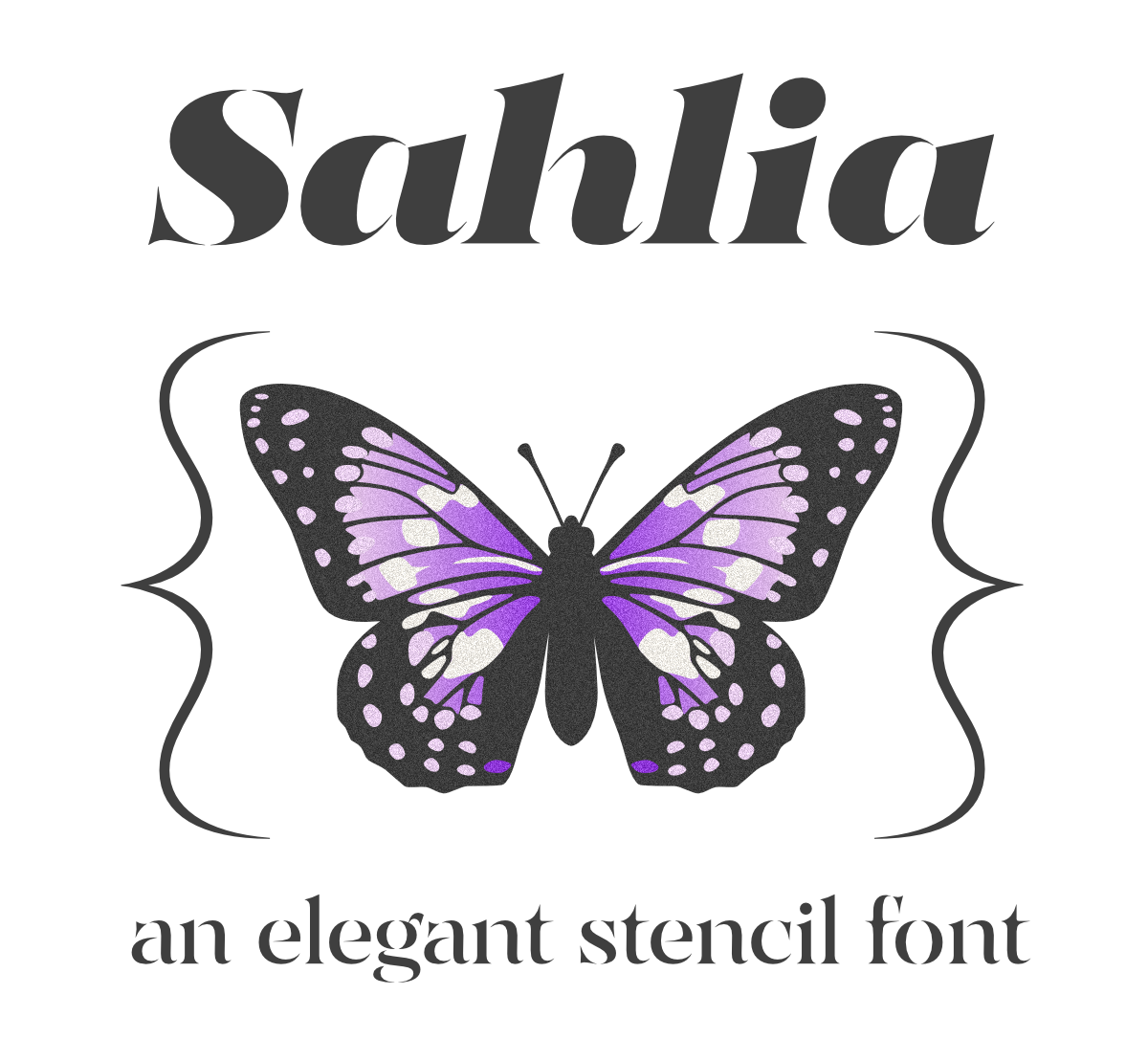
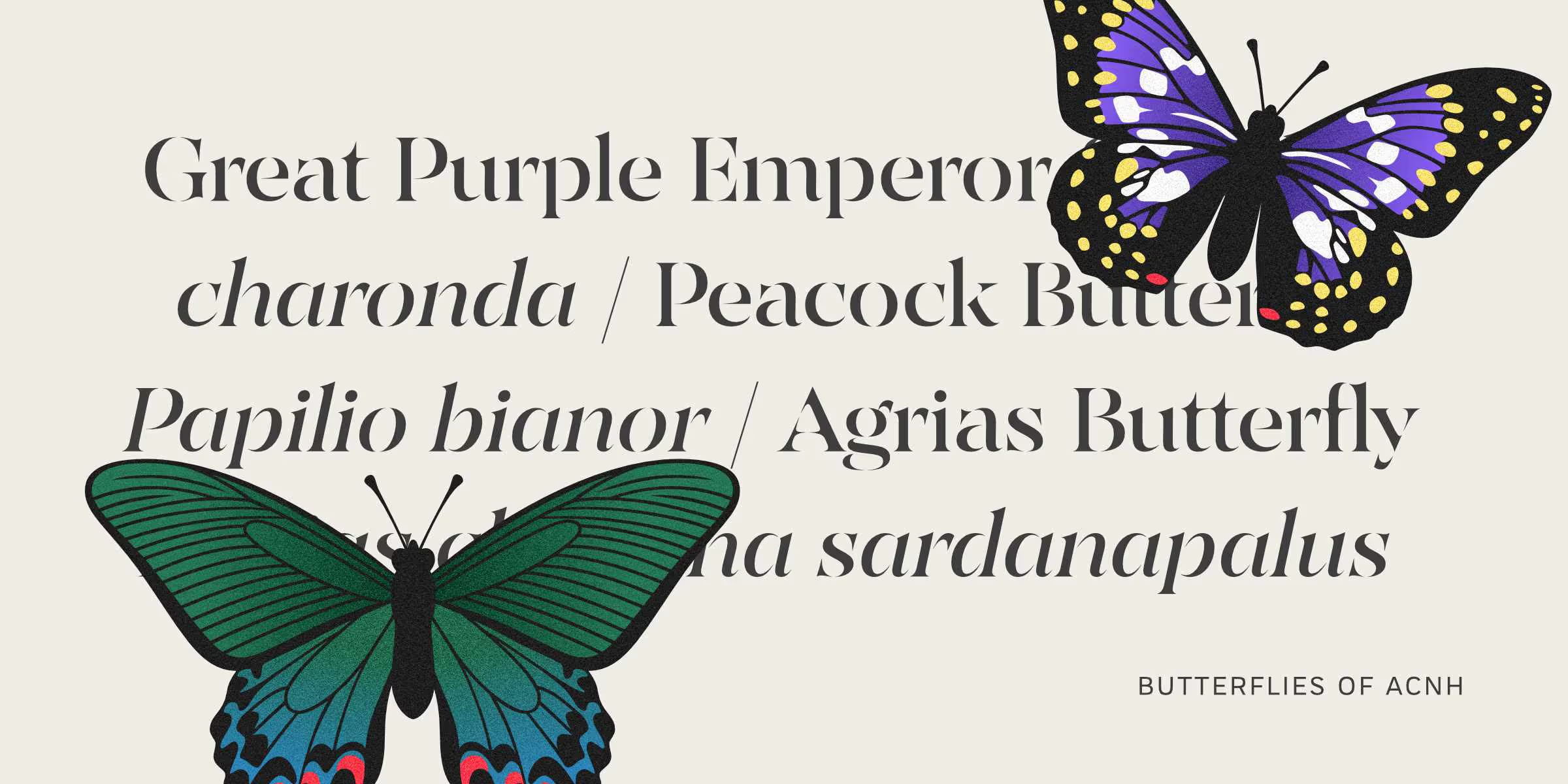
Sahlia is a high-contrast stencil typeface where the thin parts vanish like they’re weathered and worn, leaving behind forms that feel elegant with a bit of an edge. The sharp serifs and dramatic weight range make it a versatile voice for editorial, packaging, and lifestyle design.


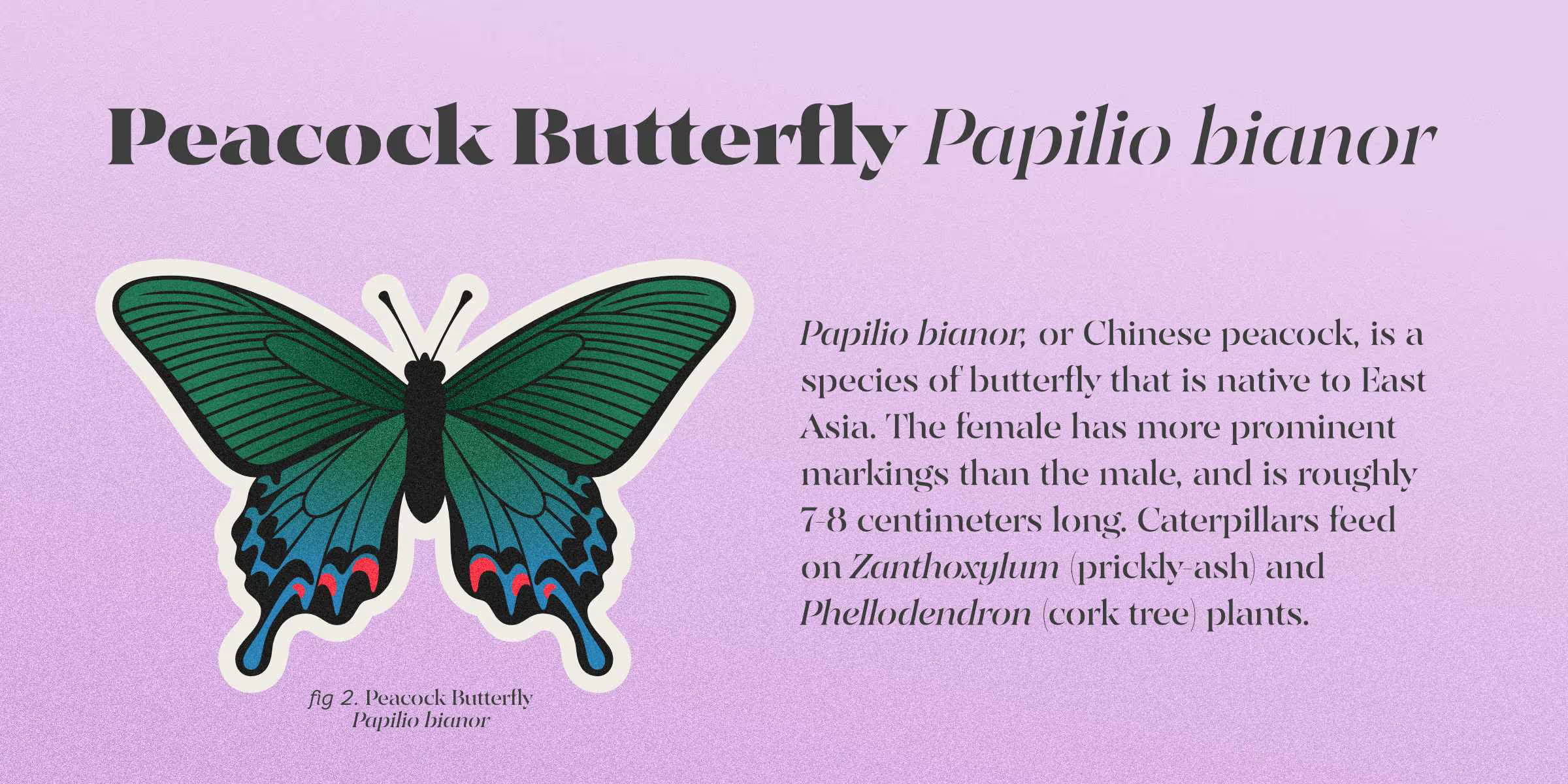
Sahlia has a variable font with a weight axis ranging from extra light to bold. It also uses the ITAL axis for the italics. Read more about variable fonts here.


Sahlia is a stencil typeface that defies convention. Where most stencils slice away parts of the letters, Sahlia’s extreme contrast dissolves the thin parts entirely, as though worn away by time and touch. The result is something both structured and organic: sharp, high-contrast serifs softened by a delicacy that feels almost accidental. In the lighter weights, Sahlia has a graceful, airy presence—in the heavier weights, the forms turn more dramatic without losing their luxurious tone.
Designed for projects that aim to make an elegant statement with an edge, Sahlia performs in editorial layouts, on luxury packaging, and across lifestyle content. It pairs naturally with the visual language of candles, self-care, and slow living—spaces where beauty and a quiet boldness coexist. For a softer character, the teardrop terminal alternates bring additional warmth and open up a gentler expressive range while preserving the typeface’s distinctive presence.
Latin-Based Languages: 327
Acheron
Achinese
Acholi
Achuar-Shiwiar
Afar
Afrikaans
Aguaruna
Ahtna
Alekano
Aleut
Alonquin
Amahuaca
Amarakaeri
Amis
Anaang
Andaandi, Dongolawi
Anuta
Aragonese
Arbëreshë Albanian
Asháninka
Ashéninka Perené
Atayal
Balinese
Banjar
Bari
Basque
Batak Dairi
Batak Karo
Batak Mandailing
Batak Simalungun
Batak Toba
Bemba (Zambia)
Bena (Tanzania)
Bikol
Bini
Bislama
Borana-Arsi-Guji Oromo
Bosnian
Breton
Buginese
Candoshi-Shapra
Caquinte
Caribbean Hindustani
Cashibo-Cacataibo
Cashinahua
Catalan
Cebuano
Central Aymara
Central Kurdish
Central Nahuatl
Chachi
Chamorro
Chavacano
Chiga
Chiltepec Chinantec
Chokwe
Chuukese
Cimbrian
Cofán
Cook Islands Māori
Cornish
Corsican
Creek
Crimean Tatar
Croatian
Czech
Danish
Dehu
Dimli
Dutch
Eastern Arrernte
Eastern Oromo
Efik
English
Esperanto
Faroese
Fijian
Filipino
Finnish
French
Friulian
Gagauz
Galician
Ganda
Garifuna
German
Gheg Albanian
Gilbertese
Gooniyandi
Gourmanchéma
Guadeloupean Creole French
Gusii
Gwichʼin
Haitian
Halkomelem
Hani
Hawaiian
Hiligaynon
Hopi
Huastec
Hungarian
Icelandic
Ido
Iloko
Inari Sami
Indonesian
Interglossa
Interlingua
Interlingue
Irish
Istro Romanian
Italian
Ixcatlán Mazatec
Jamaican Creole English
Japanese
Javanese
Jola-Fonyi
K'iche'
Kabuverdianu
Kaingang
Kala Lagaw Ya
Kalaallisut
Kalenjin
Kamba (Kenya)
Kaonde
Kaqchikel
Karelian
Kashubian
Kekchí
Kenzi, Mattokki
Khasi
Kikuyu
Kimbundu
Kinyarwanda
Kirmanjki
Kituba (DRC)
Klingon
Kongo
Konzo
Kven Finnish
Kölsch
Ladin
Ladino
Lakota
Latgalian
Lithuanian
Lojban
Lombard
Low German
Lower Sorbian
Lozi
Luba-Lulua
Lule Sami
Luo (Kenya & Tanzania)
Luxembourgish
Macedo-Romanian
Madurese
Makonde
Malagasy
Malaysian
Maltese
Mandinka
Mandjak
Mankanya
Manx
Maore Comorian
Maori
Mapudungun
Marshallese
Matsés
Mauritian Creole
Meriam Mir
Meru
Mezquital Otomi
Minangkabau
Mirandese
Mizo
Mohawk
Montenegrin
Munsee
Murrinh-Patha
Muslim Tat
Mwani
Mískito
Naga Pidgin
Navajo
Ndonga
Neapolitan
Ngazidja Comorian
Nisg̱a'a
Niuean
Nobiin
Nomatsiguenga
North Azerbaijani
North Marquesan
North Ndebele
Northern Kurdish
Northern Qiandong Miao
Northern Sami
Northern Uzbek
Norwegian
Nuučaan̓uɫ
Novial
Nyanja
Nyankole
Occitan
Ojitlán Chinantec
Orma
Oroqen
Otuho
Palauan
Pampanga
Papantla Totonac
Papiamento
Paraguayan Guaraní
Pedi
Picard
Pichis Ashéninka
Piemontese
Pijin
Pintupi-Luritja
Pipil
Pite Sami
Pohnpeian
Polish
Portuguese
Potawatomi
Purepecha
Páez
Quechua
Romanian
Romansh
Rotokas
Rundi
Samoan
Sango
Sangu (Tanzania)
Saramaccan
Sardinian
Scots
Scottish Gaelic
Secoya
Sena
Seri
Seselwa Creole French
Shawnee
Shipibo-Conibo
Shona
Shuar
Sicilian
Silesian
Slovak
Slovenian
Soga
Somali
Soninke
South Azerbaijani
South Marquesan
South Ndebele
Southern Aymara
Southern Qiandong Miao
Southern Sami
Southern Sotho
Spanish
Sḵwx̱wú7mesh
Sranan Tongo
Standard Estonian
Standard Latvian
Standard Malay
Sundanese
Swahili
Swedish
Swiss German
Tagalog
Tahitian
Talysh
Tedim Chin
Tetum
Tetun Dili
Ticuna
Tlingit
Toba
Tojolabal
Tok Pisin
Tokelau
Tonga (Tonga Islands)
Tonga (Zambia)
Tosk Albanian
Tsakhur
Tumbuka
Turkish
Turkmen
Tzeltal
Tzotzil
Uab Meto
Umbundu
Ume Sami
Upper Guinea Crioulo
Upper Sorbian
Venetian
Veps
Vietnamese
Volapük
Võro
Wallisian
Walloon
Walser
Waray (Philippines)
Warlpiri
Wayuu
Welsh
West Central Oromo
Western Abnaki
Western Frisian
Wiradjuri
Wolof
Xhosa
Yanesha'
Yao
Yoruba
Yucateco
Zapotec
Zulu
Zuni
Záparo
This font is available under our standard EULA which you can find on our Licensing page. If legal documents aren’t your thing, you can also check out our detailed Frequently Asked Questions page.
Trial fonts are available for internal testing purposes only. You can use them to evaluate if the font is a good fit for your project and to pitch the font to your clients. Make sure to upgrade to the full license before delivering or publishing any work that uses the fonts.
These fonts include the full character set and all features so you can get a very accurate idea of how cool they are but they say “trial” right in the font menu to remind you what they are.
Sahlia 2.0 released Apr 2026
✦ Added more weights ranging from Light to Extra Bold
✦ Italic styles added
✦ Language support expanded to 327 Latin Languages
✦ Removed swash feature
✦ Change the shape of some diacritics
Sahlia 1.0 released Feb 2023